


We ran a plain query in tlooto’s paper search: large language models title abstract screening systematic review. The result count came back at 24,053,355 papers. The first page was relevant. So was the fifth. That is the trap.
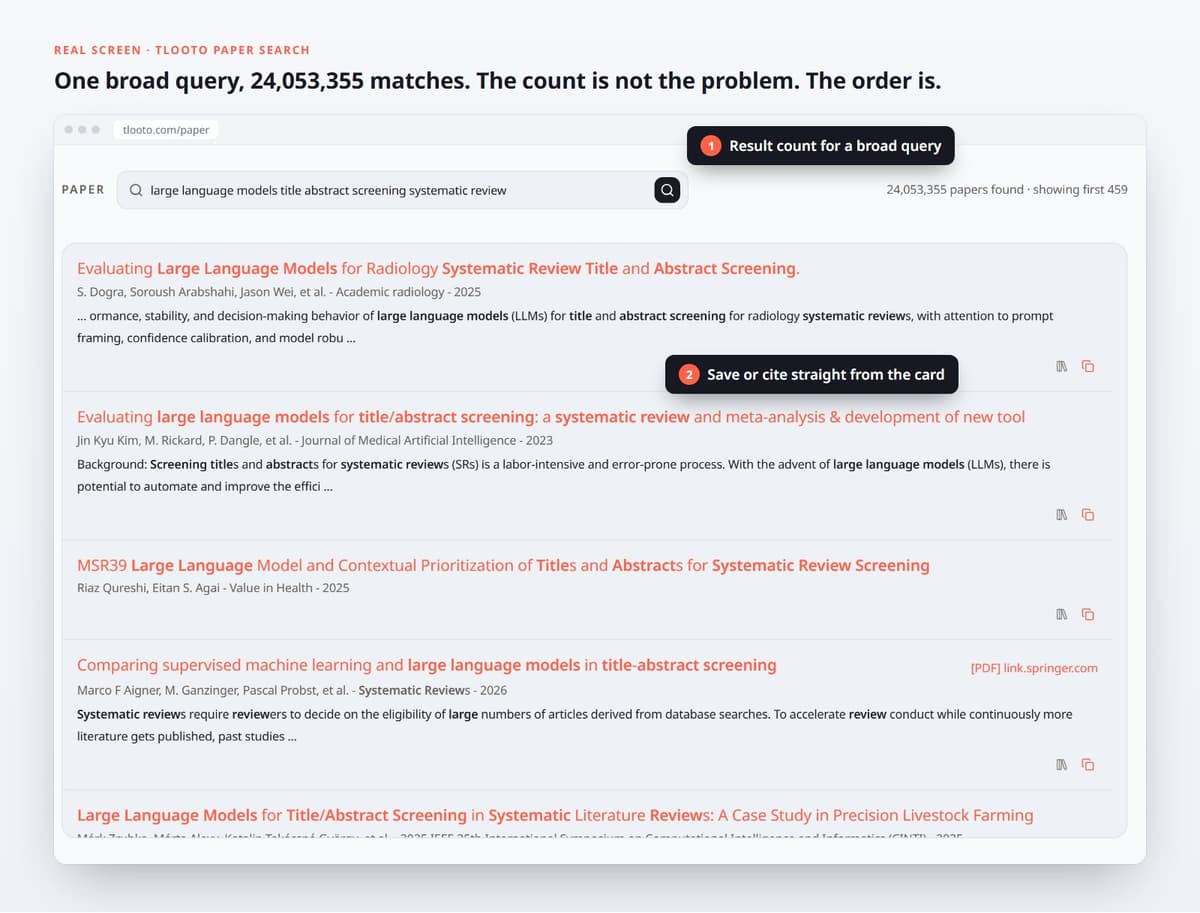
When everything looks relevant, people do one of two things. They read the first ten results and stop, or they open forty tabs and lose the afternoon. Neither gives you a reading list you can defend to a supervisor. Scientific output grows by about 4.1% a year and doubles roughly every 17 years [1], so this will not get easier on its own.
Here is the routine we recommend. It takes about thirty minutes.
Minutes 0 to 5: write the question as one sentence
Not a topic. A question with a population, an exposure or method, and an outcome. How does nightly smartphone use relate to GPA in undergraduates, and does sleep explain part of it? is searchable. Smartphones and students is not.
Minutes 5 to 12: split it into three or four search intents
Each intent covers one angle of the question: the core relationship, the mechanism, the population, the study design. Run each separately. Merging them into one long query is how you end up with 24 million results.
Minutes 12 to 22: screen titles against written criteria
Before you read anything, write three or four inclusion criteria. Population, outcome measure, design, time window. Then go down each result list and mark include, exclude or unsure based on the title and abstract only. The criteria stop you from keeping papers just because they are interesting.
Minutes 22 to 30: rank what survived
Put the includes in order: the papers that answer your question directly first, then method papers, then background. That is your reading list, and you can explain why every paper is on it.
Where tlooto fits
tlooto does the mechanical part of this routine for you. Ask the question in the Report view and it breaks it into complementary search intents, runs several queries per intent against a scholarly index, screens each candidate against explicit inclusion criteria, and writes a cited report from the papers that pass. The whole plan is visible in the Work process panel, so you can see what was searched and why a paper was kept.
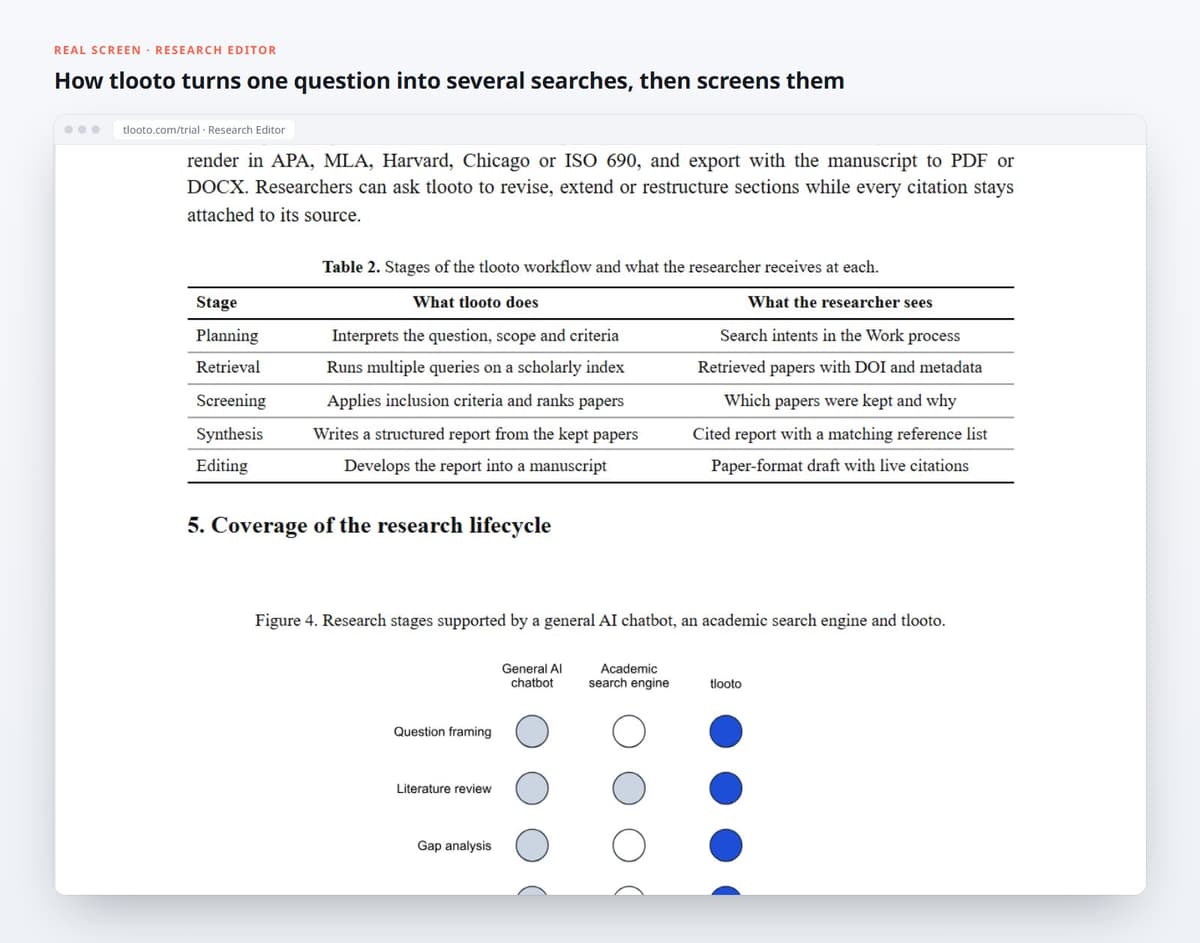
If you prefer to stay hands-on, the paper search page gives you the raw results with abstracts and citation data. Save a paper to your Library straight from the result card and it is there the next time you need it.
References
[1] Bornmann, L., Haunschild, R., & Mutz, R. (2021). Growth rates of modern science. Humanities and Social Sciences Communications, 8. https://doi.org/10.1057/s41599-021-00903-w