

Three weeks of waiting, and the email is two lines long: the manuscript is outside the scope of the journal. Nobody read the methods. Now you get to reformat the references, rewrite the cover letter and start the clock again.
Desk rejections for scope are frustrating because they are avoidable. The journal told you what it publishes. The problem is that most people choose the journal last, after the paper is written in a shape that only fits the journal they had in mind.
A shortlisting routine that takes an hour
- Start from your abstract, not from prestige. Write the abstract first, even a rough one. It is the thing an editor reads to decide scope.
- Find where similar papers were published. The best predictor of fit is whether a journal has recently published work with your method, population and question.
- Build a shortlist of five. One reach, three realistic, one safe. Check indexing, open access policy and fees for each.
- Read two recent papers from each. Scope pages are vague. Recent articles tell you what the editors actually accept.
- Only then format. Reference style, word limit, structured abstract. Format once, for the first journal on the list.
How AI Journal Finder shortens step two
Finding where similar papers were published is the slow part. AI Journal Finder does it from your manuscript. Paste the title and abstract, and it analyzes the content and returns a ranked list of journals that publish work like yours, with ISSN and eISSN so you can check each one.
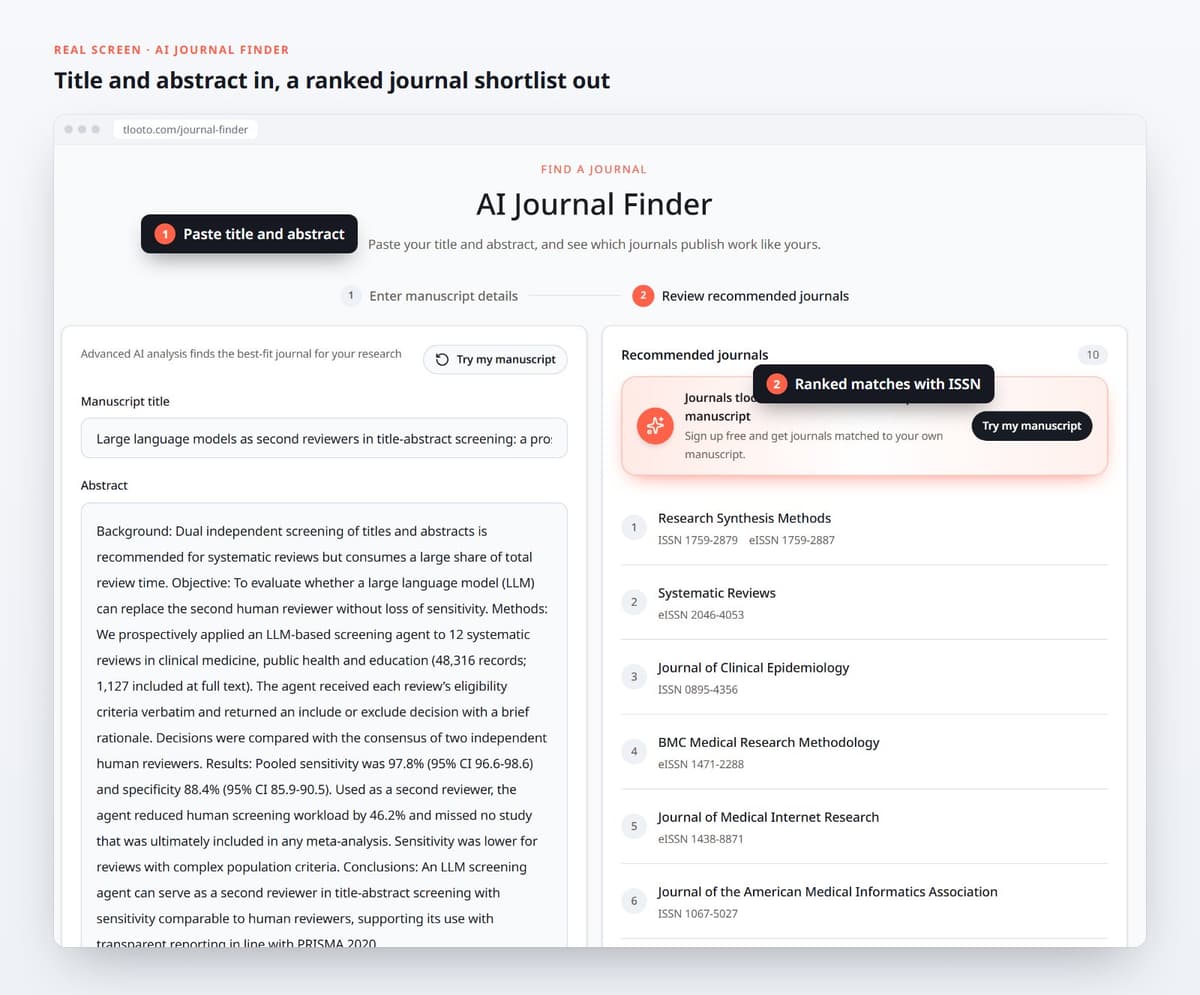
The example analysis on the AI Journal Finder page. A methods paper on LLM-assisted screening is matched to evidence-synthesis and medical informatics journals.
Notice what the example returns for a paper about using language models in systematic review screening: Research Synthesis Methods, Systematic Reviews, Journal of Clinical Epidemiology, BMC Medical Research Methodology. Those are the journals where that community actually publishes. A keyword-only approach would have suggested AI journals that rarely take methods papers from evidence synthesis.
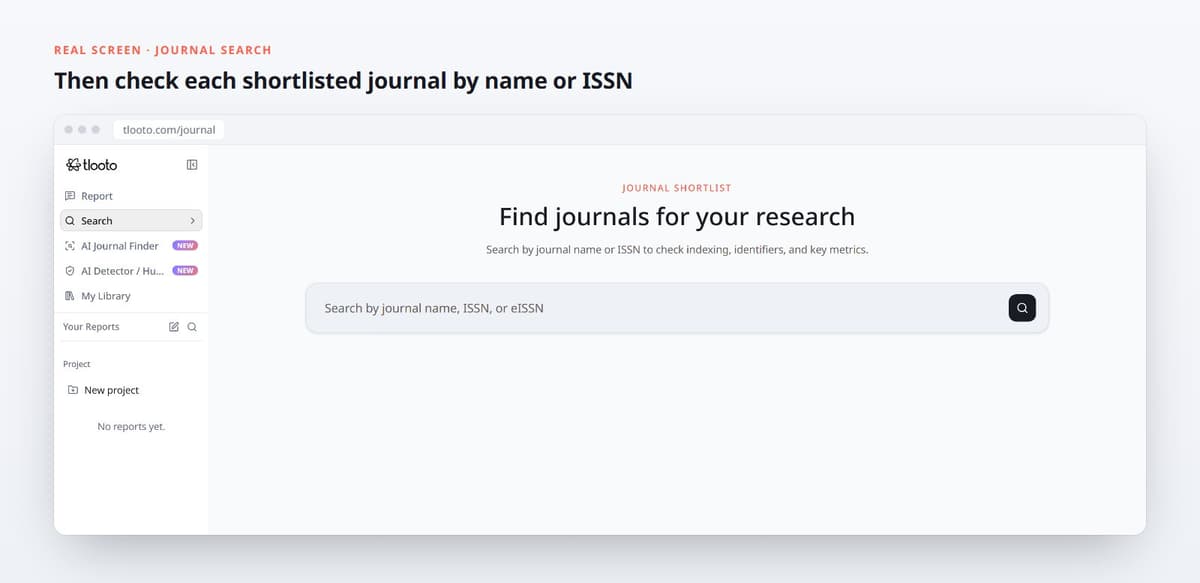
From the shortlist, use the journal search to look up any title by name or ISSN and check indexing, identifiers and key metrics before you commit.
The final decision is still yours. You know your field’s unwritten rules, your co-authors’ preferences and your deadline. But a shortlist built from where similar work is published gives you a much better first choice than a guess.