

It is 11 p.m. The first-choice journal rejected the paper, the second-choice journal wants Chicago author-date, and your draft is in APA with 64 references. You know what the next three hours look like: italics, ampersands, et al. thresholds, DOI prefixes, the order of the year.
Reference formatting is not intellectually hard. It is just slow, and every manual pass introduces new mistakes.
References should be data, not text
The reason reformatting is painful is that most drafts store references as typed text. Change the style and every entry has to be retyped. In tlooto, each reference is a record with its authors, title, venue, year and DOI. The formatted text is generated from that record, so a style change is a single menu choice.
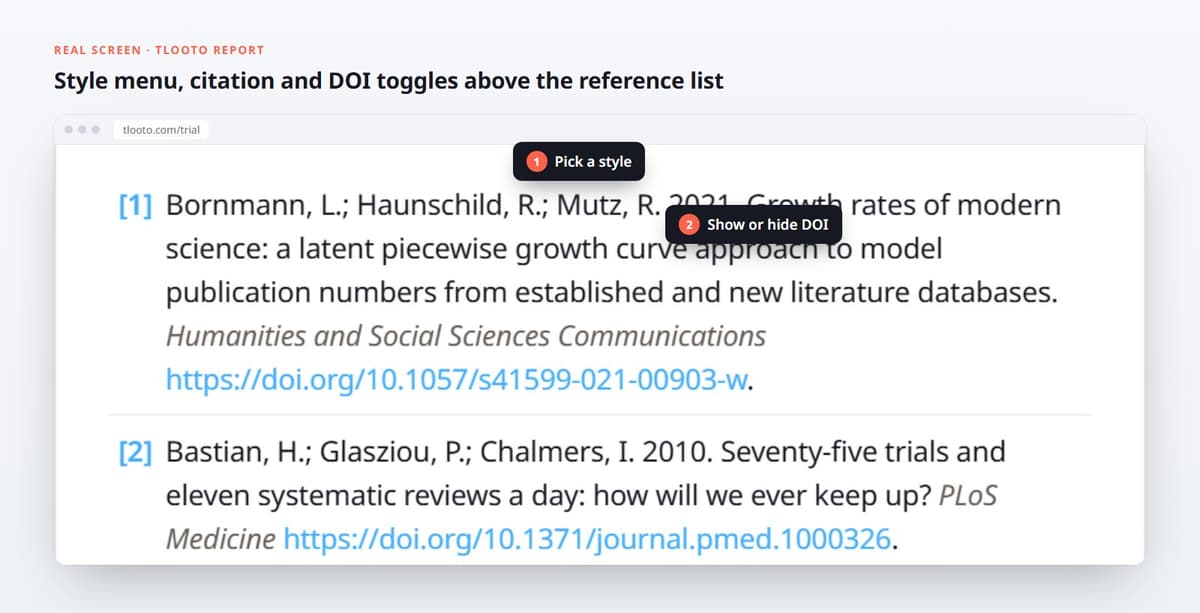
The references panel in a tlooto report. The style menu, citation toggle and DOI toggle sit above the list.
- Five styles: APA, MLA, Harvard, Chicago and ISO 690.
- DOI display on or off, depending on what the journal asks for.
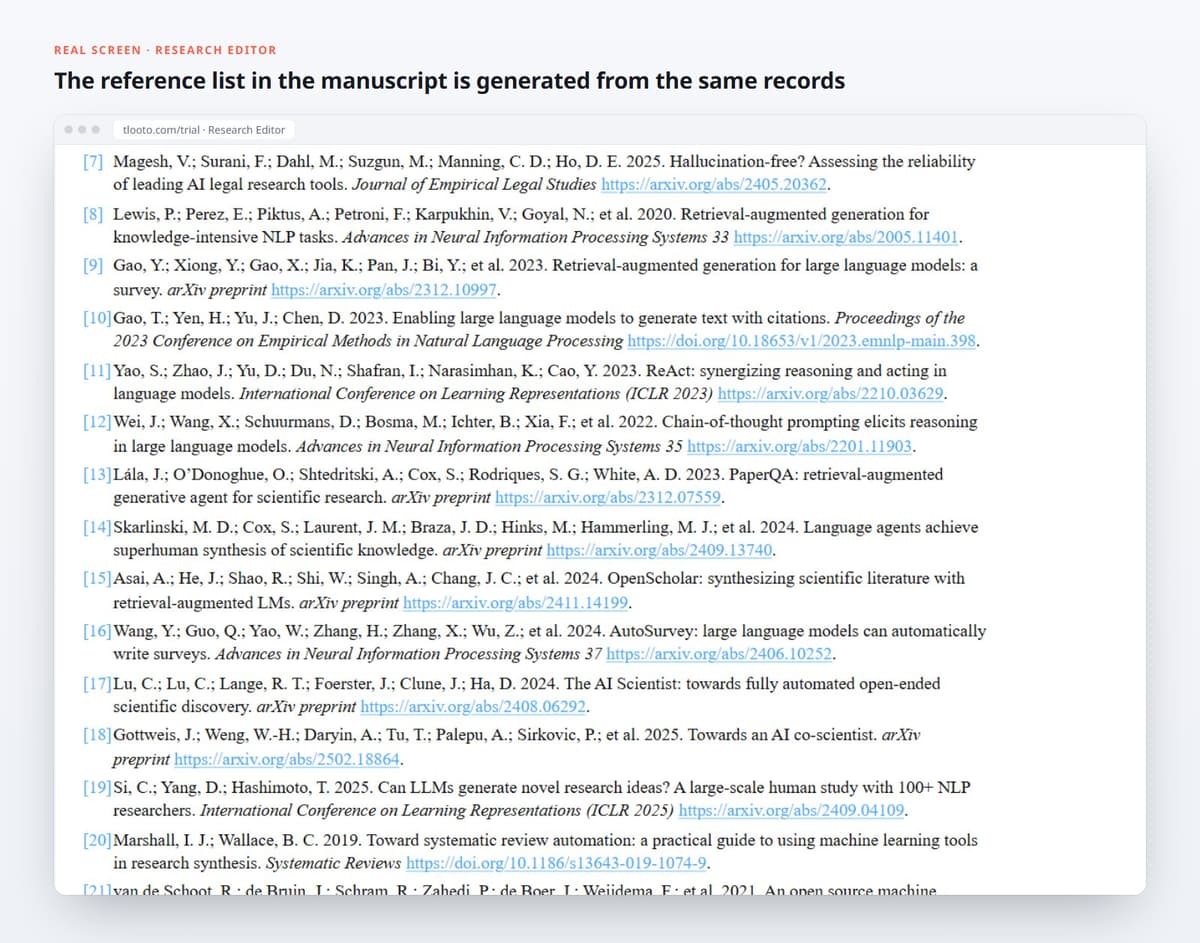
- In-text citations renumber automatically as you move text in the Research Editor.
- Copy a single formatted reference from your Library when you need one in another document.
- Export the manuscript to PDF or DOCX with the references already in the chosen style.
Import what you already have
If your references live in a reference manager, you do not have to start over. The tlooto Library imports reference files or a whole export folder, and can create Library references automatically from paper PDFs you upload. Once they are records, they format like everything else.
One habit worth keeping
Even with automatic formatting, check the journal’s author guidelines for house rules: some cap the number of authors before et al., some want DOIs as URLs, some do not. Set the closest style, then spend your ten minutes on those exceptions instead of on all 64 entries.