


The question arrives in almost every first supervision meeting: what is the gap? And the most common answer, nobody has looked at this, is also the easiest to take apart. Someone usually has. Sometimes it is in a neighboring field, sometimes in another language, sometimes in a conference paper you did not find.
A defensible gap is not an absence you noticed. It is an argument you can support with citations.
Four kinds of gaps that hold up
- Population gap. The relationship is established in one group but not tested in another where there is reason to expect a difference.
- Method gap. The existing evidence relies on a design with a known weakness, such as cross-sectional self-report, and a stronger design is feasible.
- Contradiction gap. Studies disagree, and nobody has tested what explains the disagreement.
- Mechanism gap. We know that something happens, but not why. The mediator or moderator has not been measured.
A four-step method
1. Map what is agreed. List the three or four findings that most papers support. Cite them. This is your background.
2. Map what is debated. Find where results conflict and note what differs between those studies: sample, measure, design, context.
3. Check the limitations sections. Authors tell you what they could not do. When several papers name the same limitation, that is a strong signal.
4. Write the gap as one sentence with citations on both sides.Studies in X consistently find A [1–4], but none has measured B, which [5] and [6] suggest could explain the effect. If you cannot cite both halves, it is not ready.
Where tlooto helps
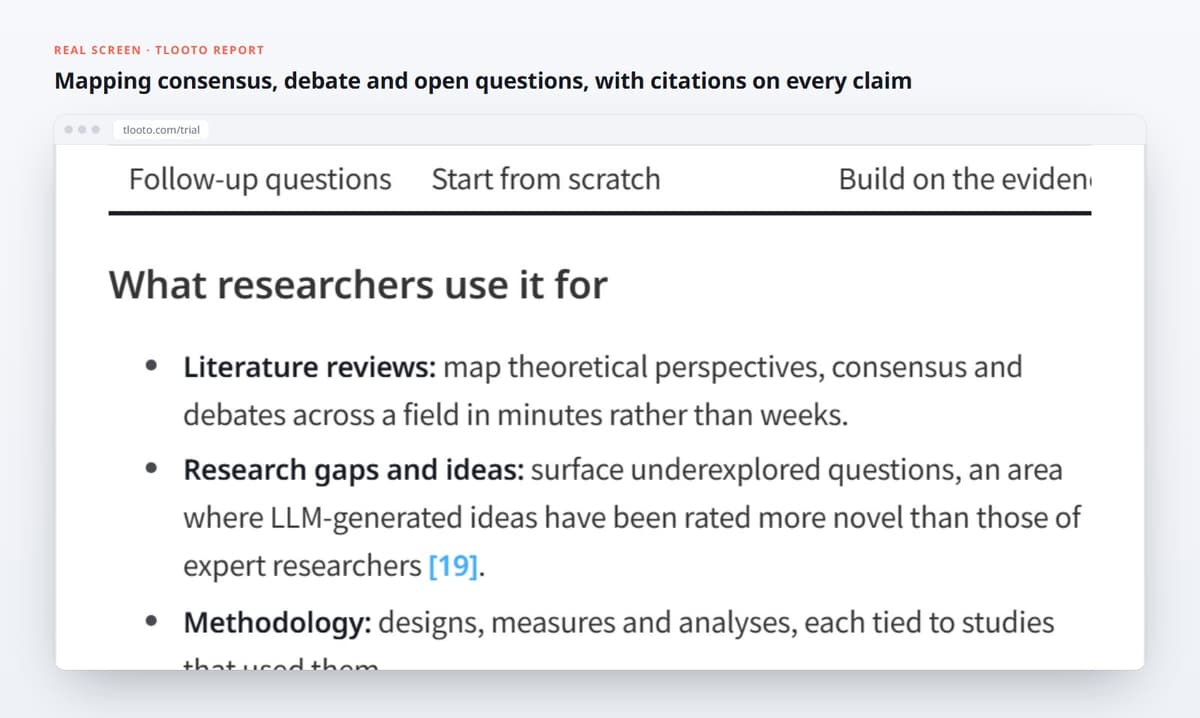
Steps one and two are where most of the reading time goes. Ask tlooto the question behind your topic and the report maps theoretical perspectives, consensus and debates across the retrieved papers, with a citation on every claim. It also surfaces underexplored questions, drawn from the same evidence rather than invented.
Because every step of the run is visible, you can see which searches were run and which papers were kept. That matters when your supervisor asks the follow-up question: how do you know?
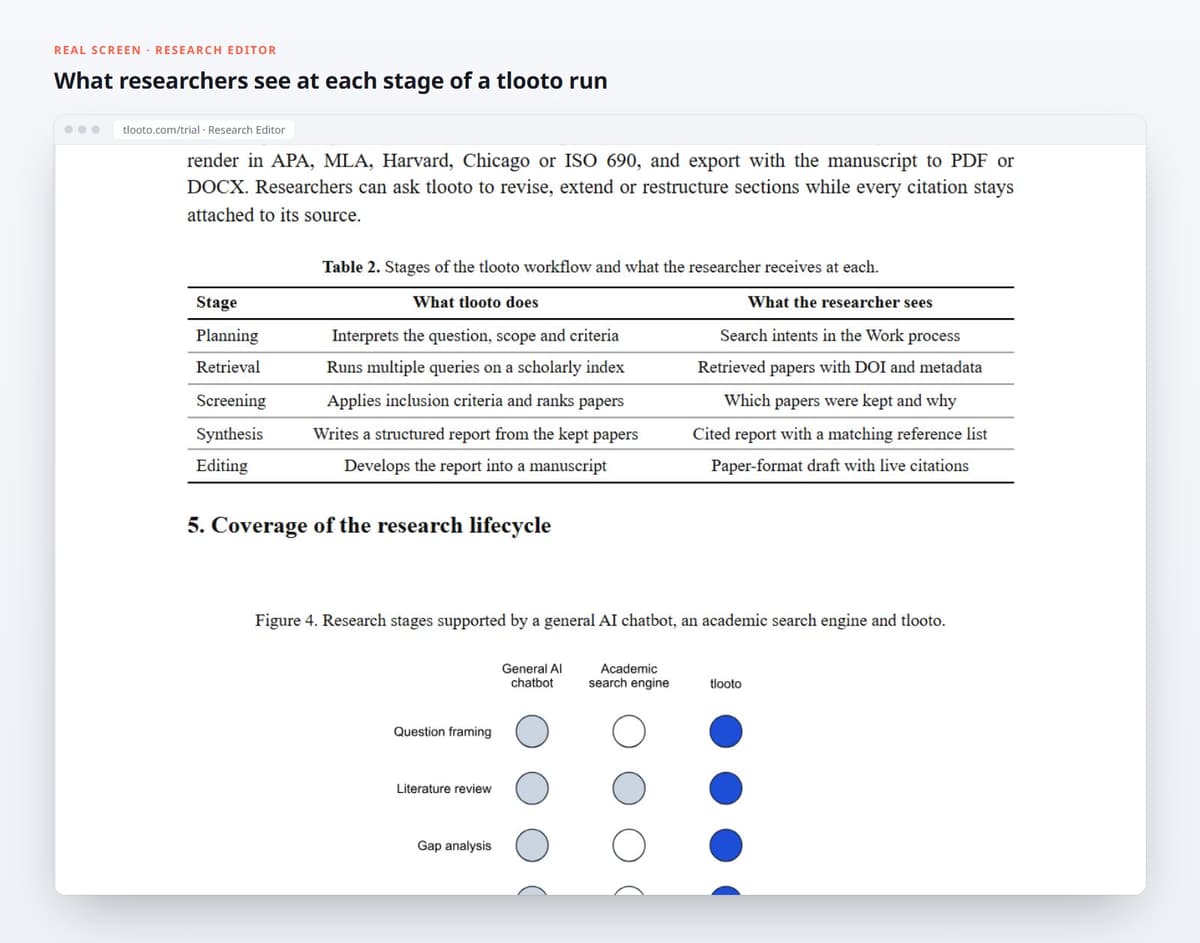
Treat the suggested gaps as a starting point, not an answer. Open the cited papers, read their limitations, and check whether the gap survives. Then ask a follow-up in the same thread: tlooto builds on the evidence already found instead of starting over.