
Lottery prediction calculator
Lottery prediction calculator
Lottery prediction calculator
A lottery prediction calculator refers to a tool, model, or algorithm intended to predict or improve the selection of winning lottery numbers. Such calculators commonly analyze historical results, search for number patterns ("hot" or "cold" numbers), or use complex mathematical models to give users a perceived edge in lottery play.
However, the overwhelming consensus among statisticians and researchers is that these tools do not actually increase your chances of winning in a fair, well-designed lottery. Lottery draws are intentionally structured for randomness—mathematically, every number combination has an equal chance of being drawn, regardless of previous results or perceived patterns.
Most modern lotteries employ a combinatorial model (e.g., picking 6 numbers from a pool of 49). The probability of selecting the winning combination is calculated as:
where is the total number pool, is the numbers drawn, and is the binomial coefficient (the number of ways to choose numbers from ). For a standard 6/49 lottery, this equates to
so each unique set of 6 numbers has a in chance.
Crucially, each draw is independent—previous draws do not influence future ones, and there is no mathematical advantage to tracking "hot" or "cold" numbers. This property is well established in probability theory and underpins the fairness and unpredictability of lotteries[1][2].
Most lottery prediction calculators operate by:
Such features may give the illusion of enhanced strategy, but from a statistical perspective, they cannot objectively increase the probability of winning. Claims to the contrary often exploit cognitive biases like the gambler's fallacy and over-optimism—phenomena frequently observed in player behavior[1][3].
Additionally, behavioral studies show lottery players often believe they possess above-average skill or luck, despite the negative expected value (i.e., players will lose money on average in the long term)[1]. This is a form of "unrealistic optimism"—common when evaluating games of chance.
Peer-reviewed analyses emphasize lotteries as negative-sum games: The payout is less than the money collected, with the remainder used as state revenue or implicit taxes[1][4]. No matter what system is used to pick numbers, the expected return is negative[1][2]. Moreover, extensive research indicates that people play not because of rational expected gain, but due to psychological motives such as thrill-seeking, aspiration for upward mobility, and the allure of a life-changing win[1][3].
Philosophical research reinforces the view that, under standard probability rules, high-probability reasoning does not translate into actionable predictions in genuinely random contexts like lottery draws[5][6][7][8].
While lottery calculators cannot predict future outcomes, they can serve as educational tools to illustrate:
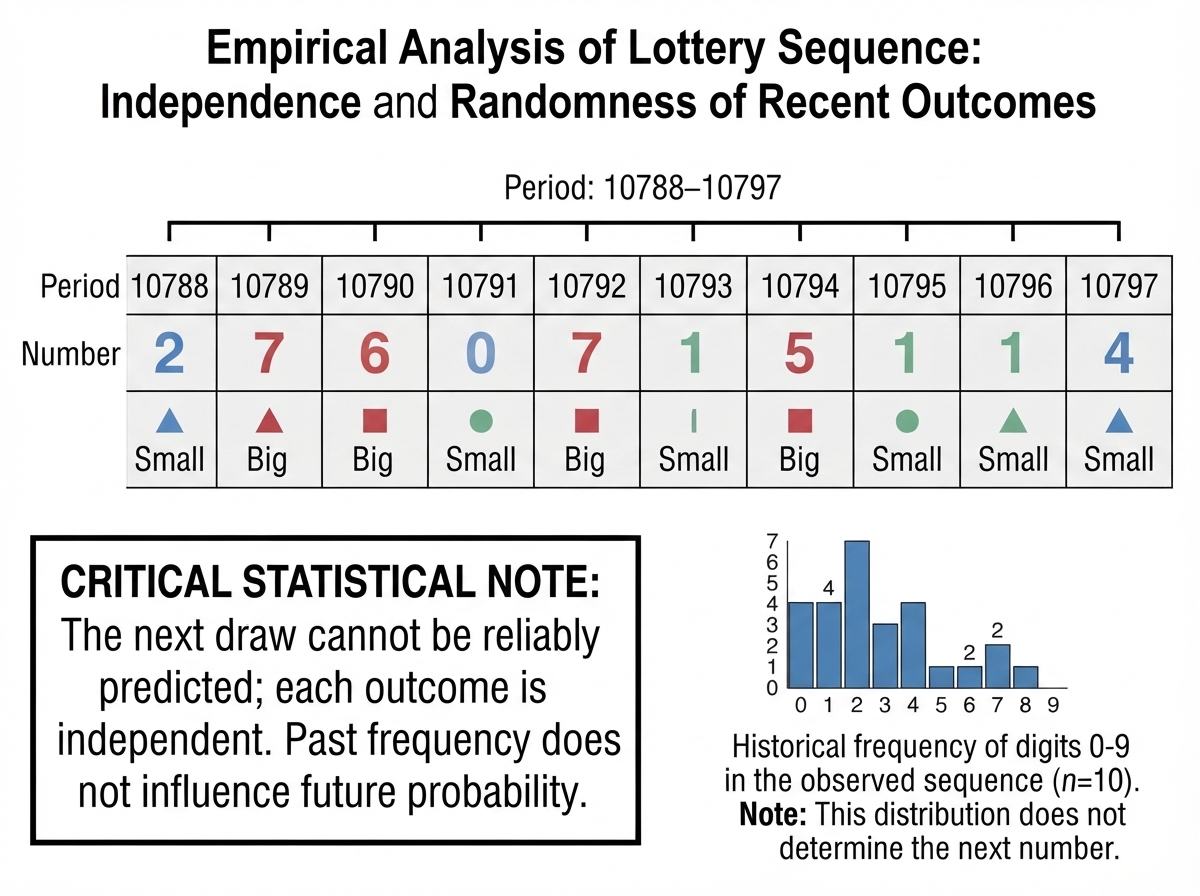
For instance, a simple calculator could analyze the frequency of past numbers, but any suggestion it can forecast the next winning numbers is fundamentally unsupported by mathematical theory or empirical research.
A "lottery prediction calculator" may provide entertainment or educational value, but it cannot alter the fundamental probabilities of a random lottery draw. From both statistical and behavioral science perspectives, using such tools does not improve one's odds of winning. Their popularity persists due to psychological factors—such as over-optimism and the thrill of play—rather than any proven predictive capability[1][3].
If your interest is in understanding probability, random processes, or human decision-making, lottery calculators can be exemplary didactic tools. But if seeking to reliably predict lottery outcomes, the evidence is definitive: No calculator or system can beat a truly random game[1][2][5].
STATMAN, M. Lottery players/stock traders. Financial Analysts Journal, 2002. https://doi.org/10.2469/faj.v58.n1.2506.
WALKER, I.; YOUNG, Juliet. An economist's guide to lottery design. The Economic Journal, 2001. https://doi.org/10.1111/1468-0297.00668.
NELSON, J. E.; BEGGAN, James K. Self-serving judgments about winning the lottery. The Journal of Psychology, 2004. https://doi.org/10.3200/jrlp.138.3.253-264.
CLOTFELTER, C.; COOK, P. IMPLICIT TAXATION IN LOTTERY FINANCE. National Tax Journal, 1987. https://doi.org/10.1086/ntj41788693.
DOUVEN, I.; WILLIAMSON, T. Generalizing the lottery paradox. The British Journal for the Philosophy of Science, 2006. https://doi.org/10.1093/bjps/axl022.
BARTHA, P. Countable additivity and the de finetti lottery. The British Journal for the Philosophy of Science, 2004. https://doi.org/10.1093/bjps/55.2.301.
COMESAÑA, Juan. WHAT LOTTERY PROBLEM FOR RELIABILISM. Pacific Philosophical Quarterly, 2009. https://doi.org/10.1111/j.1468-0114.2009.01326.x.
DOUVEN, I. The lottery paradox and the pragmatics of belief. Dialectica, 2012. https://doi.org/10.1111/j.1746-8361.2012.01304.x.
Give me the next number plz
c291c3159f2145b09aa2ffd68b505a61.jpg
Generated file